Paul Weber · 5 October 2026
Exploring Interconnected Data Flows Within Framework Architectures for Enhanced Digital Autonomy
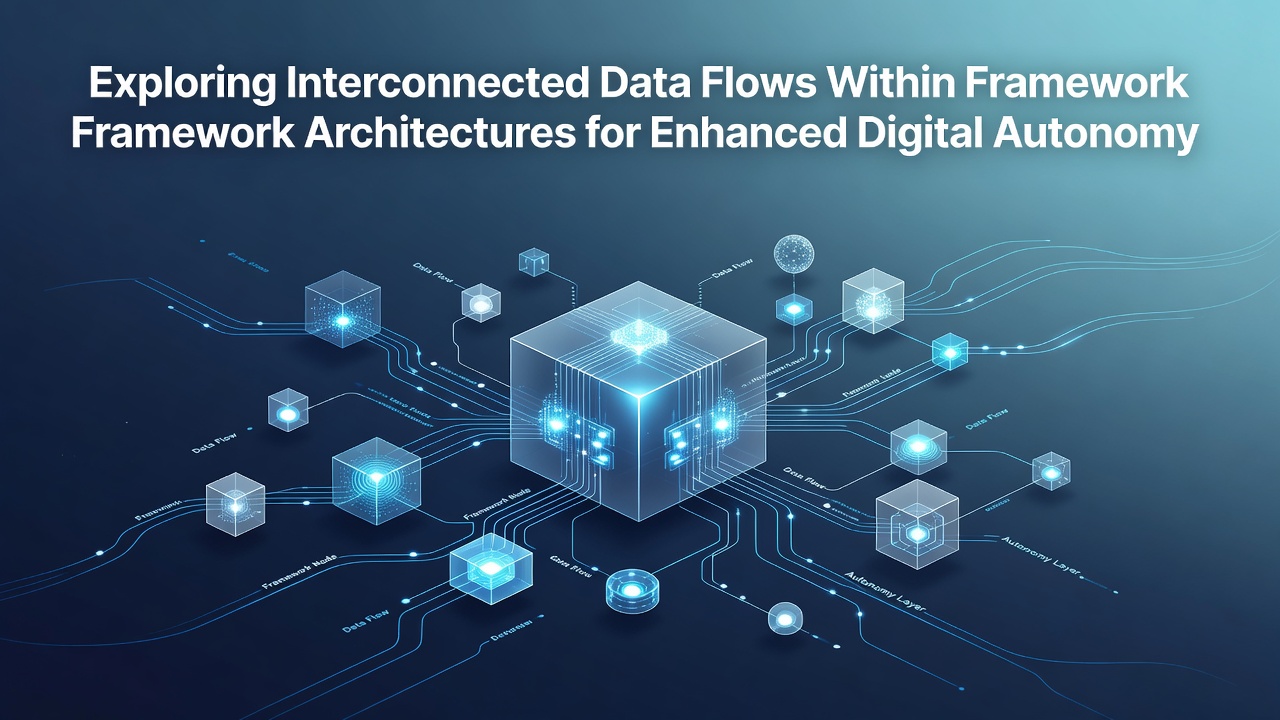
Interconnected data flows describe the movement of information across multiple layers in software frameworks, where each component exchanges structured datasets with others through defined protocols and interfaces. These flows operate within architectures designed to support modular processing, and researchers at institutions such as the National Institute of Standards and Technology have documented how standardized schemas enable consistent data routing between subsystems. Data indicates that such patterns reduce latency in large-scale deployments by allowing parallel processing nodes to access shared repositories without direct dependencies.
Core Elements of Data Flow Mapping
Mapping these flows begins with identifying entry points, transformation stages, and exit channels within a framework. Each stage applies rules for validation, enrichment, and routing, which ensures that information remains traceable from origin to destination. Studies from the Australian Department of Industry, Science and Resources reveal that frameworks incorporating real-time monitoring tools achieve higher accuracy in tracking data lineage, particularly when handling heterogeneous sources like sensor outputs and transaction logs. Observers note that visualization techniques, including graph-based representations, help teams isolate bottlenecks where volume spikes create backlogs.
Integration points often rely on message queues and event-driven triggers to synchronize operations across distributed nodes. This approach supports scalability because new modules can subscribe to relevant data streams without altering existing pipelines. Evidence from academic reports produced by the University of Toronto shows that frameworks using lightweight serialization formats maintain throughput even as node counts increase beyond several thousand. Those who've studied this know that version control on data schemas prevents compatibility issues during incremental updates.
Architectural Patterns Supporting Autonomy
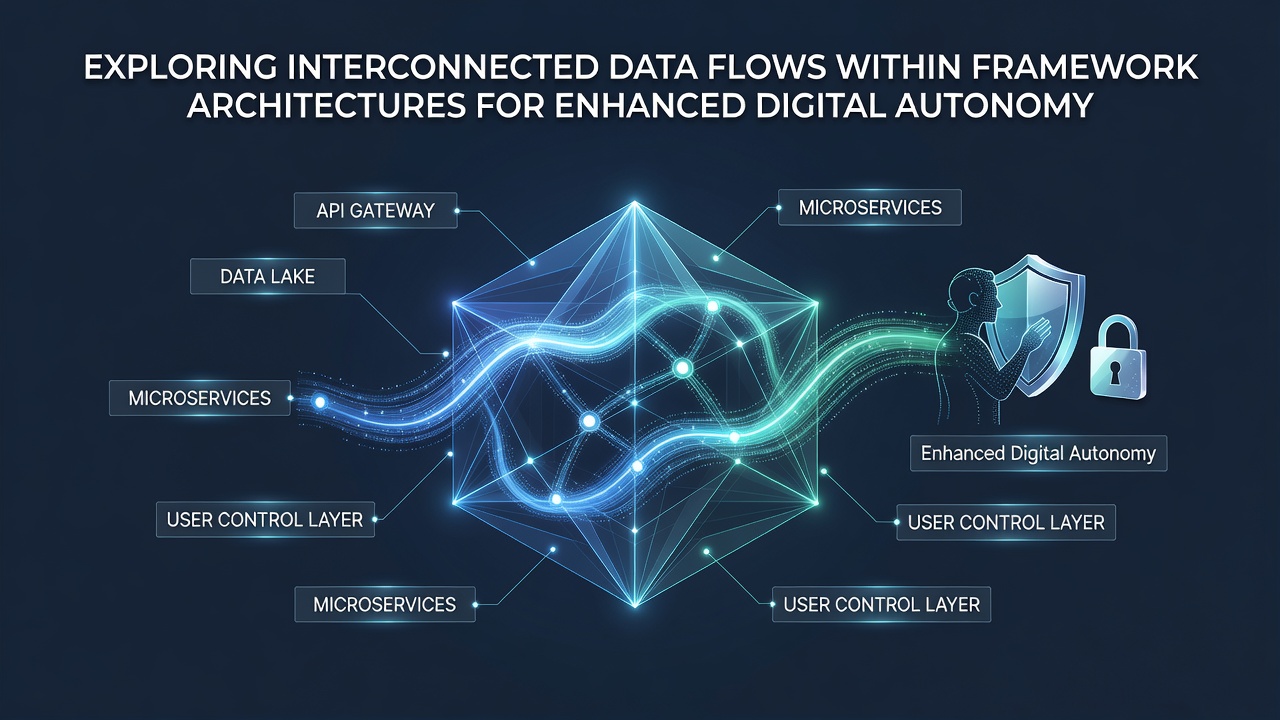
Framework architectures that promote digital autonomy emphasize local processing capabilities alongside selective external synchronization. Components retain independent decision-making logic while participating in broader data exchanges, which allows systems to function during partial network outages. According to findings released by the European Data Protection Board in coordination with technical working groups, architectures built on edge computing principles keep sensitive computations closer to the data source and thereby limit unnecessary transfers. This design choice aligns with regulatory expectations for data minimization across multiple jurisdictions.
Modular separation also facilitates audit trails because each module logs its interactions independently before passing results onward. Researchers discovered that combining container orchestration with policy engines creates enforceable boundaries around data usage, reducing the risk of unintended propagation. In October 2026, several pilot programs documented by Canadian federal innovation agencies demonstrated how such boundaries enabled organizations to maintain operational continuity while adapting to updated compliance requirements. The programs tracked metrics including data residency compliance rates and cross-module query response times.
Mechanisms for Enhanced Control and Resilience
Enhanced digital autonomy emerges when users and operators gain granular oversight over how their information traverses the architecture. Access control lists, combined with cryptographic signing at each hop, provide verifiable records of data handling. Data shows that frameworks implementing these controls experience fewer instances of unauthorized access, according to aggregated statistics from industry consortia operating in the Asia-Pacific region. What's interesting is that automated policy enforcement can adjust permissions dynamically based on contextual signals such as location or device state.
Resilience improves through redundancy in flow paths, where alternative routes activate automatically if primary channels encounter disruptions. This redundancy relies on heartbeat signals and failover mechanisms embedded in the framework core. One study revealed that organizations deploying multi-path routing observed uptime improvements of fifteen to twenty percent during simulated failure scenarios. Those patterns become especially relevant when frameworks span geographic regions with varying infrastructure reliability.
Practical Implementation Considerations
Deployment teams typically begin by auditing existing data inventories to classify sensitivity levels and usage frequency. Classification informs decisions about which flows require encryption in transit versus at rest, and which benefit from anonymization techniques before aggregation. Reports from the Japanese National Institute of Advanced Industrial Science and Technology highlight that phased rollouts, starting with non-critical modules, allow teams to validate flow integrity before expanding scope. Metrics collected during these phases include error rates per flow and average processing duration.
Training datasets used to tune machine learning components within these frameworks must also respect flow boundaries to avoid leakage across intended domains. Continuous monitoring dashboards surface anomalies such as unexpected volume increases or schema drift, prompting investigation before issues compound. The reality is that documentation of each interface contract becomes essential for long-term maintainability as frameworks evolve through successive releases.
Conclusion
Interconnected data flows within framework architectures form the backbone of systems that balance centralized coordination with distributed control. Patterns documented across government agencies, research institutions, and industry groups demonstrate measurable gains in traceability, scalability, and operational resilience. As architectures continue to incorporate edge processing and dynamic policy enforcement, the capacity for digital autonomy expands accordingly. Ongoing work in October 2026 and beyond will likely refine these mechanisms further through iterative testing and cross-regional collaboration.